TATTOO WORKSHOP - PART 1
 |
| Manulua Tattoo Association - Ni, Suʻa, Manu, & Lopeti |
In the spring of 2012, Manulua Tattoo Association took a trip to Tonga to provide education and awareness on safer tattooing. The trip was not without some rough spots, but the occasion truly marks a first-ever endeavor of itʻs kind in Tonga.
The association members gathered before the trip to make traditional tools and put together tattooing supplies. Our main goal was to educate Tongan tattooist on the dangers of using unclean and non-sterile equipment, and to also continue instilling the knowledge of traditional Tongan tattoo practice within the kingdom.
 |
Traditional Tattoo Needles on Display at the
Tonga National Museum |
The first couple of days in Tonga were spent tracking down members of the health ministry and making radio announcements on the free workshop that was going to be offered. The group also worked furiously to secure a place to conduct the workshop. We saw an unbelievable amount of young people with tattoos all over their body. Many were deported Tongans from abroad, but still many more were Tongans from within the country. As we asked people where they got their tattoos, the answer was most often from someone local. We even learned that there were several tattoo shops that had opened, one in Houma, and the others in town. We went by the shops but they were all unmarked and usually disguised within a barber shop or some other type of venue. There were a lot of home grown tattooists practicing out of their own residence or traveling from home to home.
 |
| Ni talking about sterilizing using a pressure cooker |
In Tonga, there is a divide between the older and younger generational thinking. Many of the government officials that we ran into were trying to stamp out tattooing, and most didnʻt want to acknowledge that tattooing was as prevalent in Tonga as we had seen. Securing a place to conduct our training proved to be a challenge as many of the gate keepers to these facilities would not return our phone calls after they heard it was for a "tattoo" workshop. Otherʻs also gave us the run-around saying that we needed health clearances, documents, etc. It became very frustrating to convince these officials that we were just there to perform a free community service.
 |
| Tatatau display at the training |
After finally securing a venue, we managed to talk with the Director of Health and we were offered 15-20 minutes to explain our endeavor at an HIV health conference in Nukuʻalofa. We jumped at the chance to do so as this was a great opportunity to spread our mission and vision. Initially the conference group was apprehensive to what we were doing, saying,
"We are trying to stop tattooing, but you guys are here to promote it?" With some careful and insightful explanations of facts and our public health goals, the group opened up and began praising our efforts. Their buy-in was an important first step in changing the old generational stereotypes of tattooing and changing their attitudes about tattooists. They understood and endorsed our purpose and wished us success while in Tonga.
 |
| The tradtional ceiling structure at the Tonga National Centre |
 |
| Ni, Suʻa and Peti checking out the equipment |
On the morning of the workshop, Manulua Association and their supporters set up two tables with traditional and modern tattoo equipment. We also had a work station for clean tattoo demonstration as well as sections for break out groups. The workshop was a full day and we were surprised to have about 45-50 attendees throughout the day.
Suʻa talked about the dangers of improper tattooing techniques and the harm it can cause when the artist doesnʻt use clean equipment. Equally important, Suʻa also talked about poor aftercare and what happens to a tattoo if the wearer does not take good care of it. There were many pictures that we used to visualize what an infection looked like and what a tattoo with poor aftercare looked like. The group showed much interest in this and everyone seemed to know of someone who had an infected tattoo. Some even said that they thought it was a natural part of the healing process! It was definitely an ʻA-Haʻ moment for all of us!
After we broke for lunch, the group resumed for the second half of the training. This section was geared more for the tattooists and doing some hands on work. We had asked the tattooists in the group to bring their equipment to the afternoon portion so that we can go over safe handling and universal precautions. Each tattooists had durable tattoo machines and equipment that was brought from outside the country. However, they were reusing needles and tubes, and it was apparent that gloves werenʻt being used regularly. Many indicated that ordering supplies on a regular basis was costly and difficult. The tattooist are mostly young and have a genuine love for art and their clients. But they just didnʻt grasp how diseases can spread through reused needles, tubes and ink. One group member said that he wishes he could get gloves, but that they are very expensive and most of his clients donʻt pay him enough to afford everything that goes into safe tattooing. We realized how our Western thinking of easy access and disposing of dirty equipment was not a reality for many Tongan artists. The closest suppliers of these goods were in Australia and New Zealand. Most have to rely on overseas family to bring equipment for them because computer access and having a credit card is not commonplace.
 |
| Lopeti working with some of the artists on cleaning their equipment |
AFter bringing out all their equipment, Lopeti sat down with some of the artists and had them clean their machines, wires, and other accessories. Using gloves, the artists began cleaning and Peti explained the importance of taking care of their machines. It was a profound moment to watch the artists view tattooing as a profession as opposed to the garage experience they were used to. One of the artists pointed out that he felt looked down upon by some of the professional artists that have visited Tonga because they did not have a shop or a business setting to operate. Suʻa explained to each individual his background and starting up much like them, and where he is now with his own shop and having to learn through trial and error. The group felt more at ease and a common bond was felt between us and the participants.
 |
| Lopetiʻs Tattoo Demonstration |
Much of the afternoon was spent cleaning and talking. Towards the end of the day, Lopeti demonstrated on one of the participants who volunteered. The group watched earnestly as Peti set up his work station and used all the universal precautions much as they do in the shop. Group members had questions about setting the needle length, using gloves and napkins, tattooing depth, and other techniques to strengthen their own learning. There was a sense of amazement with the group as most had never seen a tattoo being applied in this way. Onlookers soon joined the group as the buzzing noise could be heard from the road. It was a culminating moment as all the learning of the day was put together to with this tattoo demonstration
 |
| Suʻa explaining tattooing depth and motifs |
The end of the day was closed with complementary gift bags for each of the artists. The bags contained gloves, towels, shavers, needles and tubes, and various other items. Members were also treated to a section in which Suʻa explained machine set up and the main parts of a tattoo machine. Our efforts to do a traditional tattoo demonstration didnʻt happen during this full day session, but it turned out to be a rewarding and fulfilling day for us as well as the group participants. We each felt that we had influenced the group to think of modern tattooing as an art form that can be both professional and innovative. Group members thoroughly enjoyed the day and would soon track Suʻa down and come by to hangout and talk more about tattooing.
Our many thanks to the individuals who attended and contributed to putting this event together for us. We could not have done it without you. We are truly indebted to your love and support.


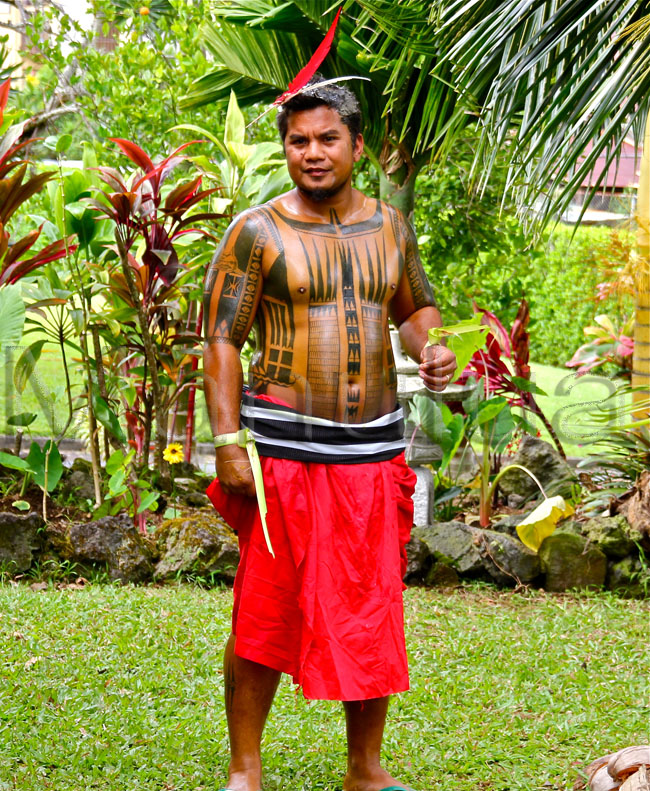


 2011 was a year filled with many new and exciting changes. Aisea was invited to Tonga to present tatatau in the kingdom for the first time in over a 150 years. We also held tool making workshops in Hilo, Hawaiʻi, and crafted some traditional implements for myself and Lopeti.

 not only through tattooing, but migrational voyages, deities, and cultural practices. We also talked a lot about how the introduction of borders and artificial classifications (i.e., Polynesian, Micronesia, etc.) have prevented islanders from continuing long standing relationship with each other. These classifications as well as territorial affiliations with Western countries have created a disconnect in sea voyaging traditions of the past. Maui, the great demigod of much of Polynesia is also found throughout Micronesia, as well as the use of turmeric and oil for sanctifying and protecting the body.


 Another weekend workshop will be planned, but timing is probably the most difficult thing to coordinate. Suʻa has his business and travels, which limits his travel time for teaching. His goal however is to spread the knowledge of traditional tattooing to those willing to learn. Respect for the cultures that carry on these traditions is vital to learning; and understanding the histories which have held island people close to their past is fundamental to beginning the journey.
